










Increasing requirements and risks
The requirements placed on emergency vehicles have increased significantly in recent years. In addition to traditional components, complex electrical systems, auxiliary equipment and alternative drive technologies are increasingly being used. In particular, batteries with high energy-density, electrical control systems and additional loads such as radio equipment or special signalling systems significantly increase the fire load.
Fuelled vehicles also pose a risk that should not be underestimated. High temperatures in the engine and exhaust areas, as well as potential maintenance issues, can lead to fires in an emergency. Since the parking area in vehicle depots is limited, there is also a risk that a fire could spread quickly to other vehicles.
Fire protection as a crucial factor
Despite these risks, fire protection in emergency vehicles and vehicle depots has often been neglected in the past. However, given the high investment costs and the importance of operational readiness, this issue is becoming increasingly relevant.
An effective fire protection strategy encompasses both preventive and reactive measures. The aim is to detect fires at an early stage, report them quickly and prevent them from spreading. Regular tests, maintenance and compliance with applicable safety standards are essential in this regard.
Comprehensive solution concepts
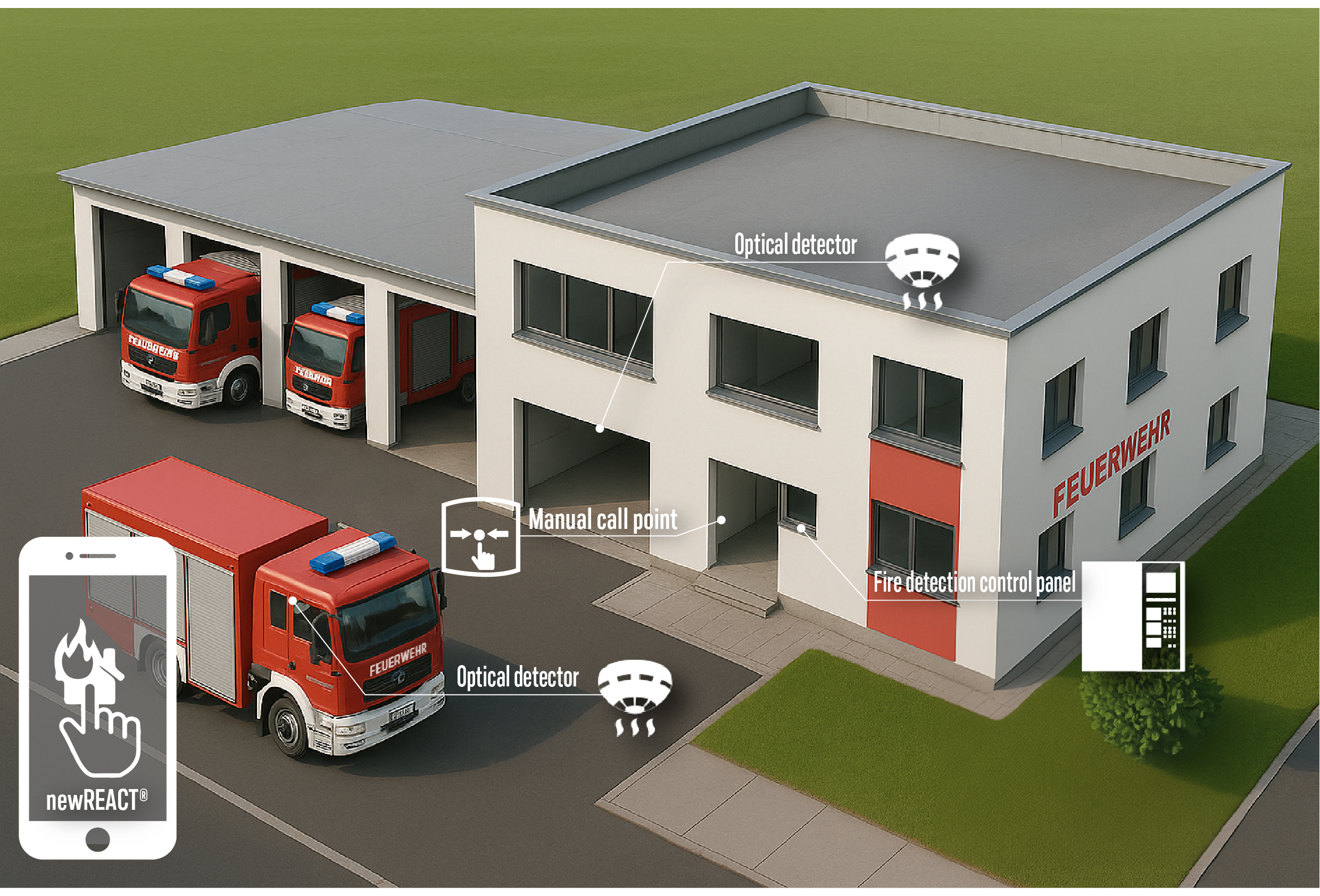
Effective fire protection for emergency vehicles requires a combination of technical, organisational and structural measures. A central part is a customised fire detection system tailored to the specific requirements of the respective emergency service organisation.
Key components include:
- Fire detection systems which evaluate all signals and allow quick alarming
- Alarming devices which immediately inform public safety personnel of dangers
- Detectors in buildings, for example in vehicle depots and adjacent areas
- Wireless detectors in vehicles that detect potential fire growth directly inside the vehicle
Seamless communication between the systems is especially important. This ensures that in the event of an emergency, a local alarm is activated which can also be automatically transmitted to the relevant authorities.
Focus on availability and protection
Detecting a fire at an early stage can play a decisive role in minimising damage and maintaining operational readiness. Modern solutions allow a quick response and, ideally, prevent a chain reaction within the vehicle depot.
In this way, well-designed fire protection strategies make a significant contribution to the security of public safety personnel, the protection of high-value equipment and the long-term safeguarding of operational capability.